Theosis
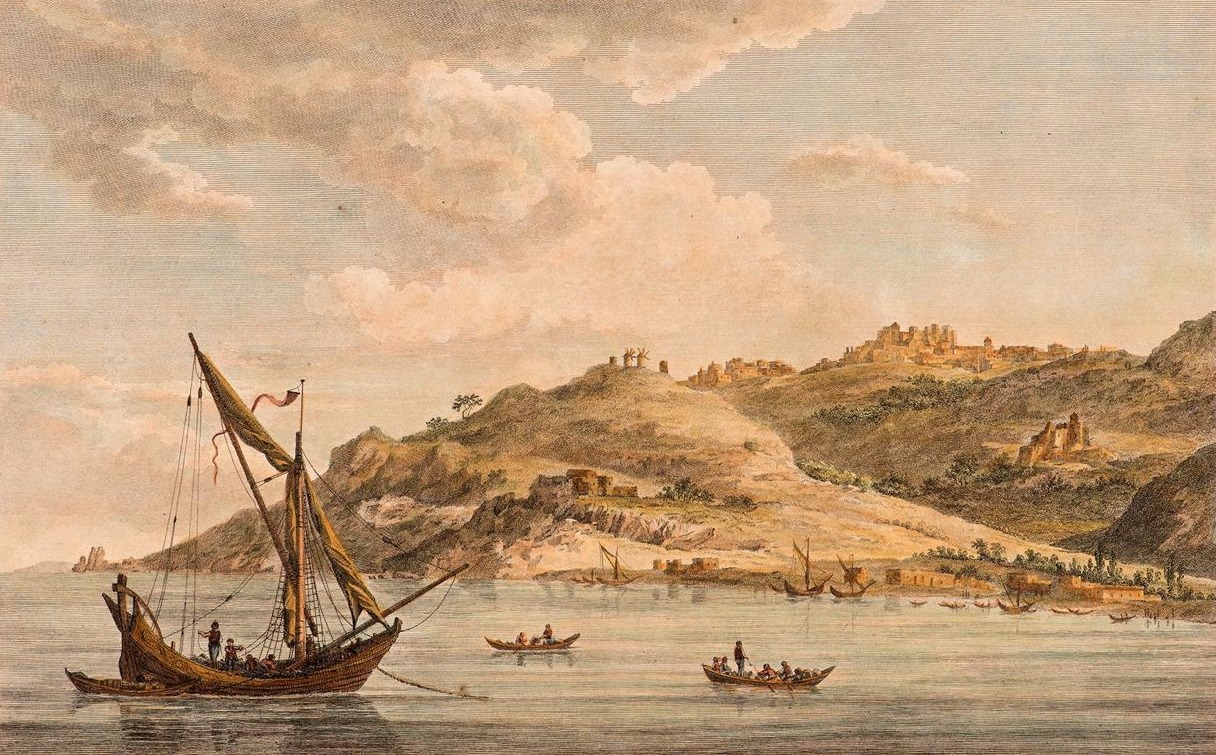
Hand-coloured engraving: Patmos seen from the sea with sailing boats, above them the Chora with the Monastery of Saint John and the windmills

Jean-Baptiste Hilair · View of the Island of Patmos, engraving, c. 1782

Seminar journey · May 2027

Patmos

Experiencing the Revelation of John

“I John, … was in the isle that is called Patmos, for the word of God …”

Revelation 1:9

A small island in the eastern Aegean, white houses on the hillside, the monastery above them like a crown – and a stillness you do not forget. For more than ten years Paul Skorpen has travelled to Patmos each year with a small group, to experience the Revelation of John where it was received: not as a dark riddle, but as a path of inner cleansing, orientation and transformation. A week of sea, light and meditation – and time to come home to yourself.

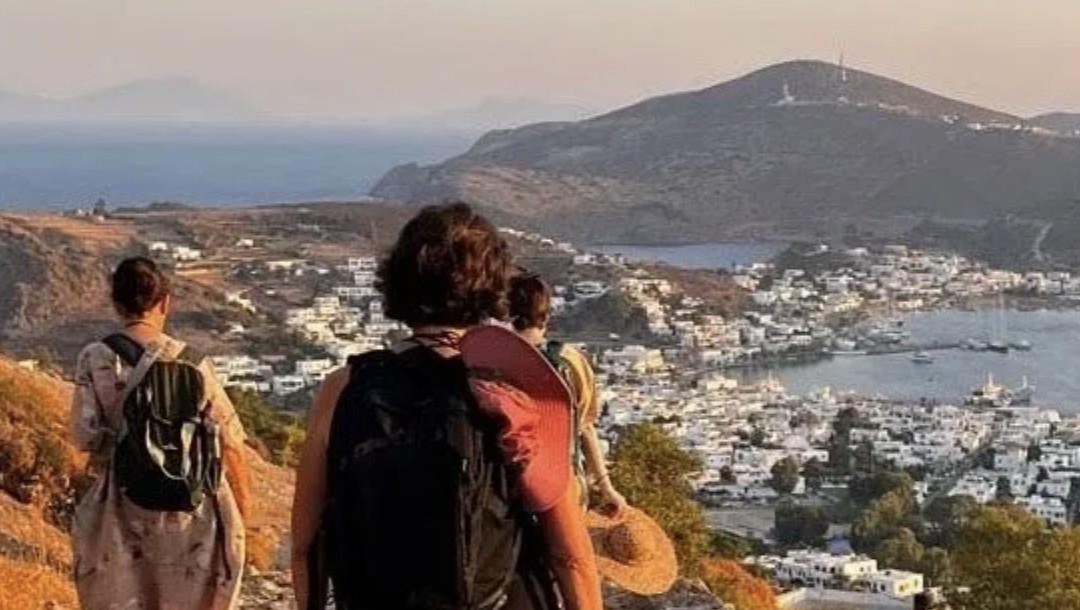
A small group walks over a hill on Patmos at sunset, with Skala and the sea below
Evening walk above Skala

Dodecanese · Greece

The island of Revelation

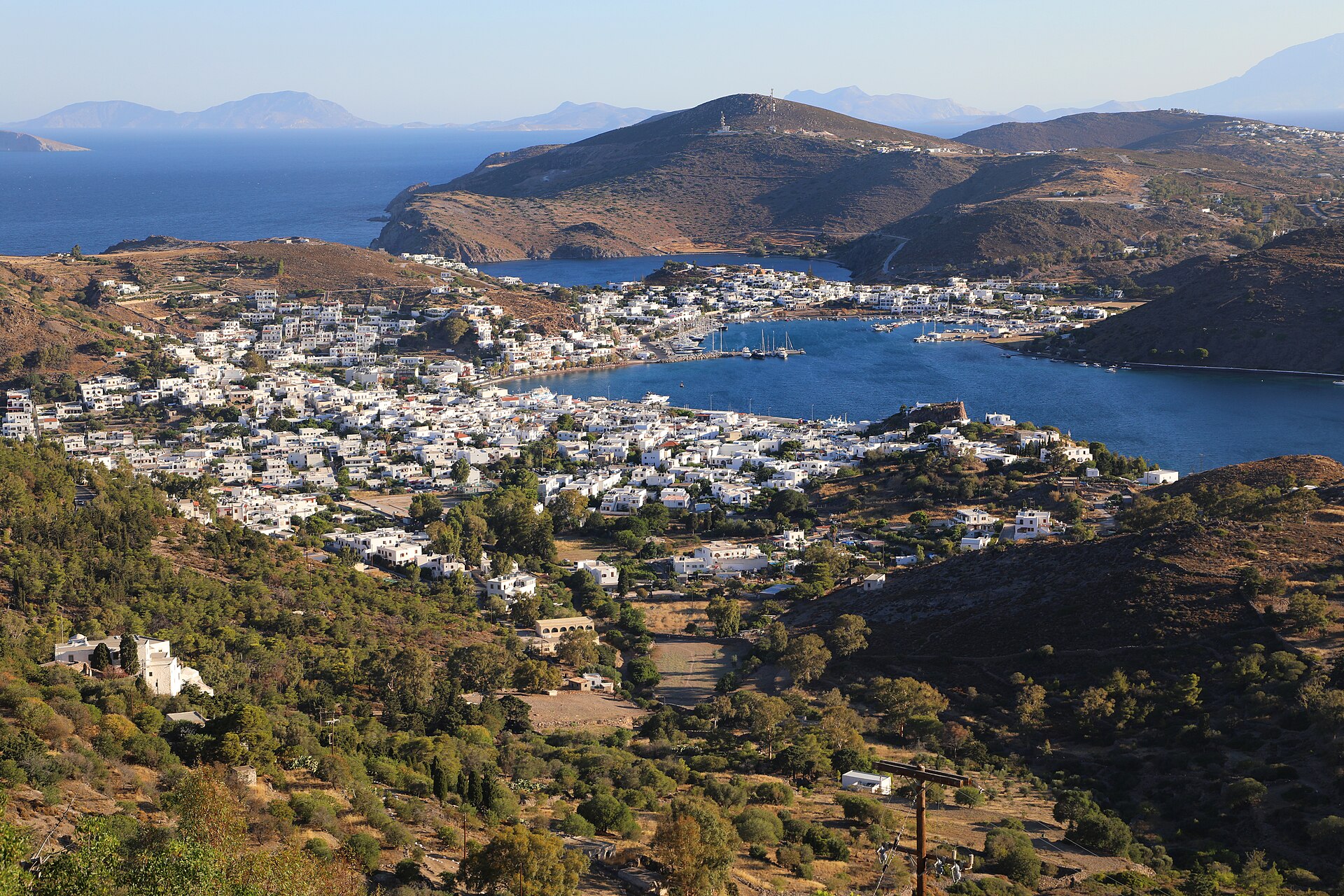
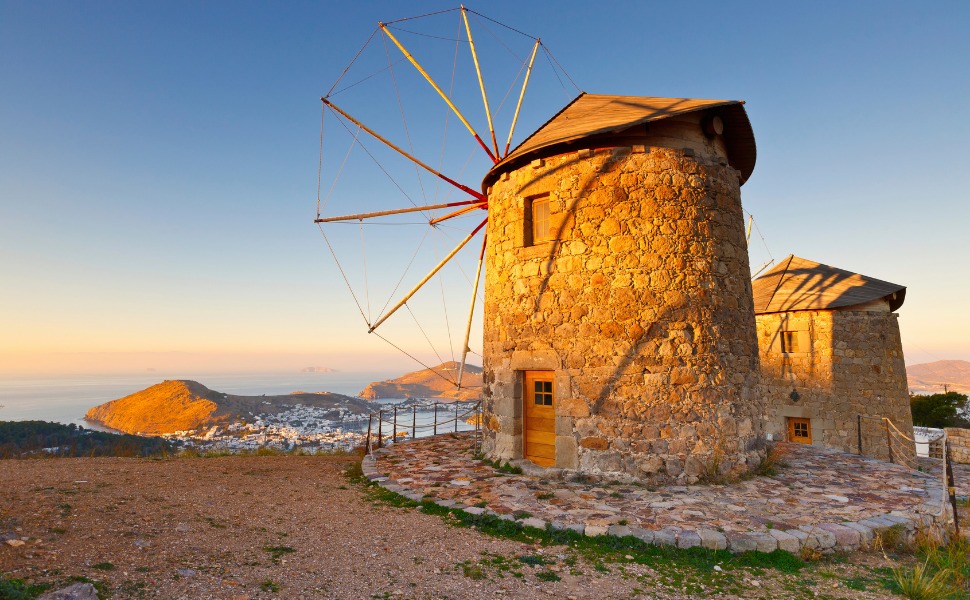
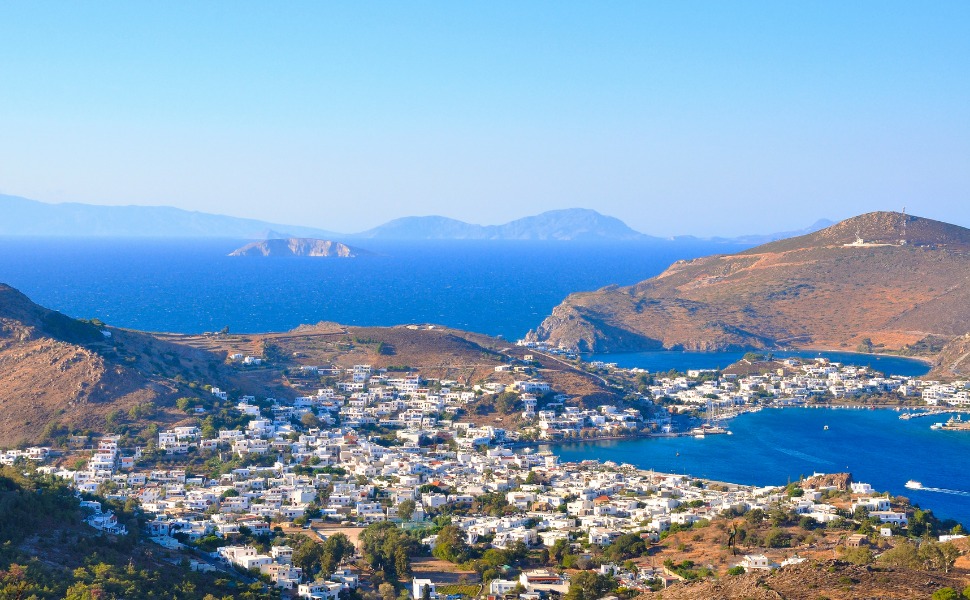
View from the windmills of the Chora down to the harbour of Skala, the white houses and the bays of Patmos
View from the Chora over Skala

Patmos is one of the smaller islands of the Dodecanese, a little over thirty square kilometres, its coastline cut into quiet bays. There is no airport; you arrive by boat, and the crossing over the Aegean already sets the tone for the week. The ferries dock at the harbour town of Skala, and above it the old Chora climbs the hill with its white lanes.

For almost two thousand years Patmos has been regarded as a holy place. The Chora, the Monastery of Saint John and the Cave of the Apocalypse have been a UNESCO World Heritage Site since 1999. And yet the island is no museum: people fish, pray, eat and laugh here – and in the evening the sun bathes the sea in a light that many visitors never forget.

Patmos has been inhabited for around five thousand years. Myth tells that Artemis herself asked Zeus to raise the island from the sea; columns from an ancient temple of Artemis are said to be built into the monastery. An old stone path laid in 1819 still leads from Skala up to the Chora – a little over two kilometres, past the Cave of the Apocalypse. Walk it in the evening sun and you experience the island as pilgrims have for centuries.

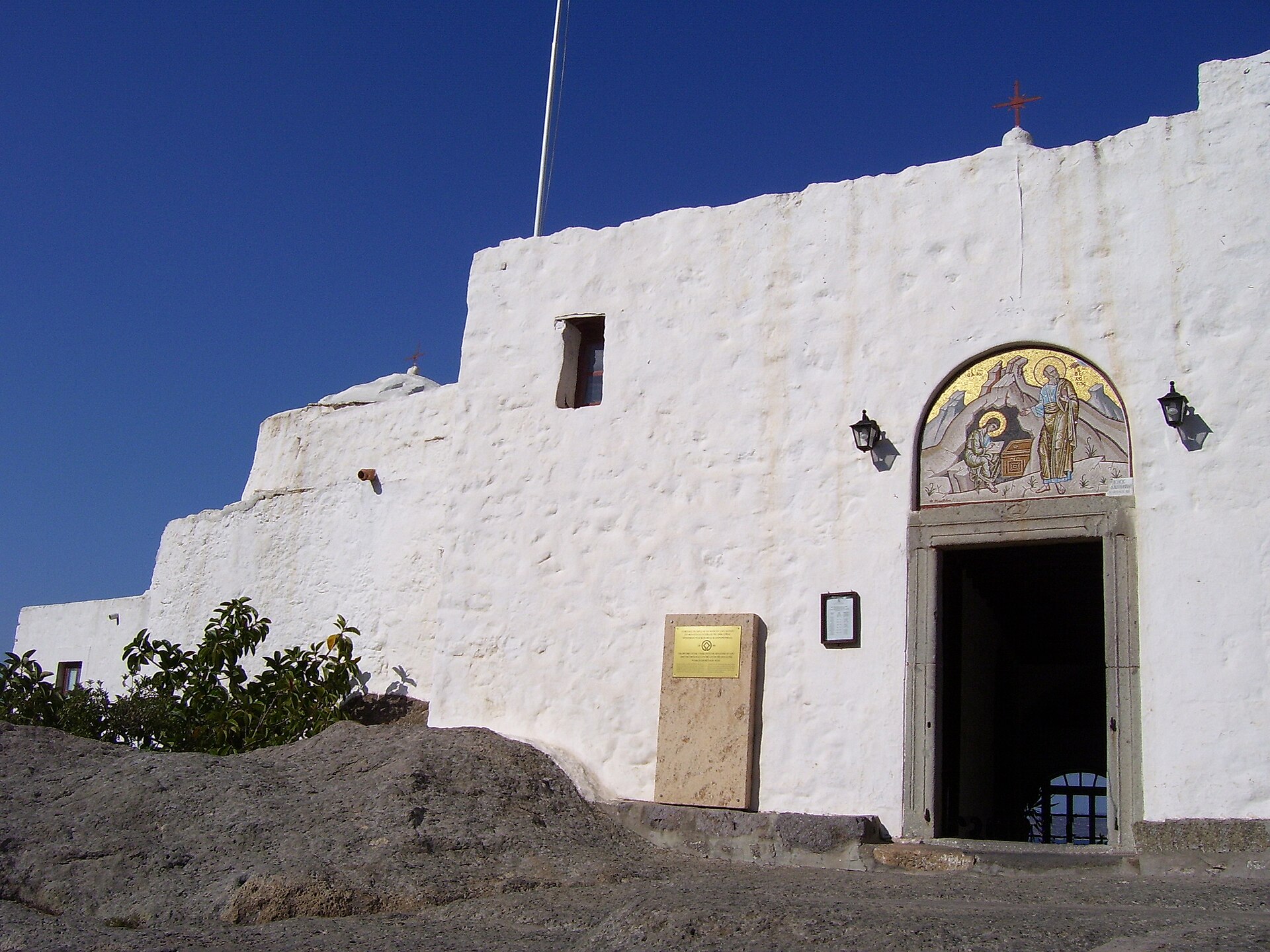
The white entrance to the Cave of the Apocalypse on Patmos under a blue sky

Halfway up to the Chora

The Cave of the Apocalypse

It is in this grotto that John is said to have received the visions he dictated to his disciple Prochorus. You can still see the niche in the rock where he is said to have rested, and the rock above it, split into three. Sit here quietly for a while and you will understand why this place has drawn people for centuries.

Founded in 1088

The Monastery of Saint John

The monk Christodoulos built the monastery high above the island, fortified like a castle. Behind its walls lie chapels full of frescoes and one of the most important monastic libraries of the Orthodox world. Around the monastery the Chora has grown, with captains’ houses, little squares and views across half the Aegean.

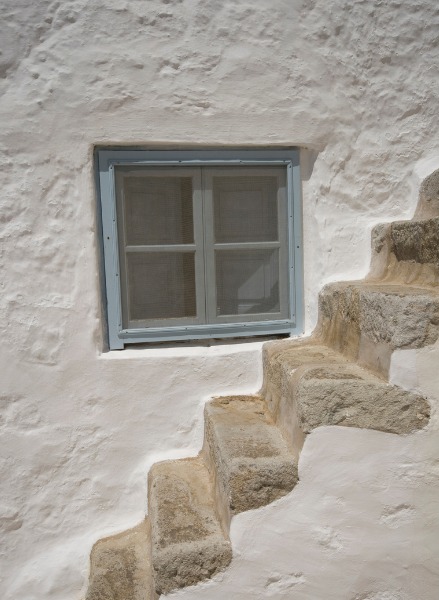
Whitewashed wall with a small blue window and stone steps
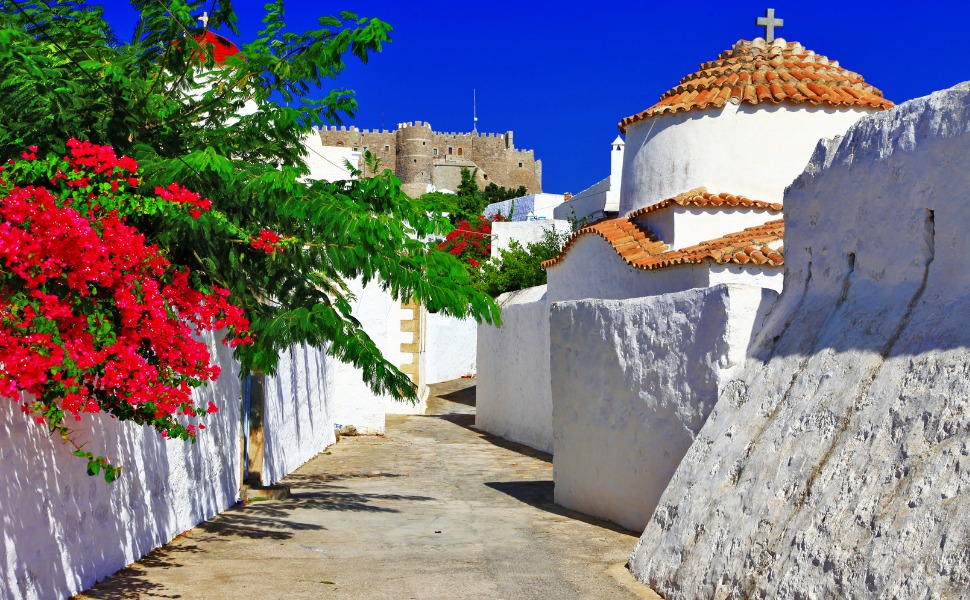
White lane in the Chora with red bougainvillea and a chapel, the walls of the Monastery of Saint John above
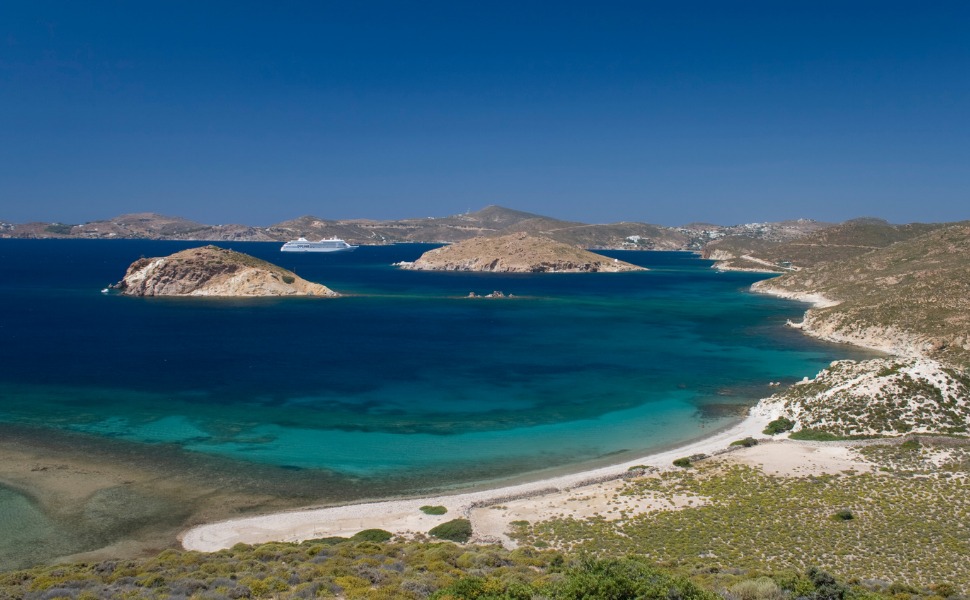
Stone windmills of the Chora in warm evening light, with the sea and Skala behind Wide bay with turquoise water, a pale sandy beach and small islands

Sea, wind and light

Bays and places of power

The windmills above the Chora, the bay of Grikos, the beach at Lambi with its coloured pebbles, the golden bay of Psili Ammos, reachable only on foot or by boat: on Patmos the places of power lie close together. We visit them together, meditate there and take our time – unhurried, like the island itself.

The seer of Patmos

John and his Gospel

“In the beginning was the Word, and the Word was with God, and the Word was God.”

John 1:1

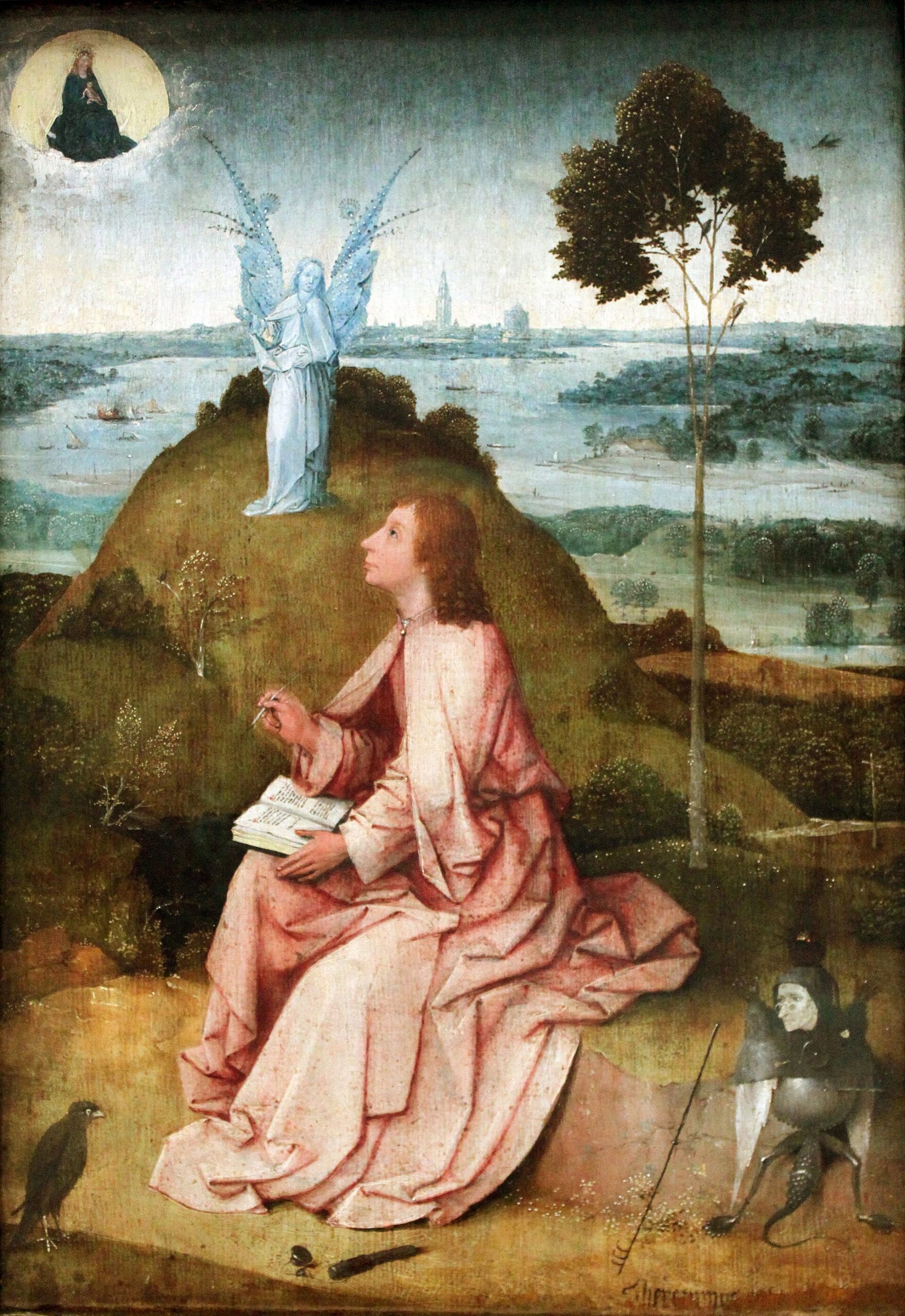
Painting by Hieronymus Bosch: John sits writing on a hill above the sea, while Mary and the Child appear in the sky
Hieronymus Bosch · Saint John on Patmos, c. 1489
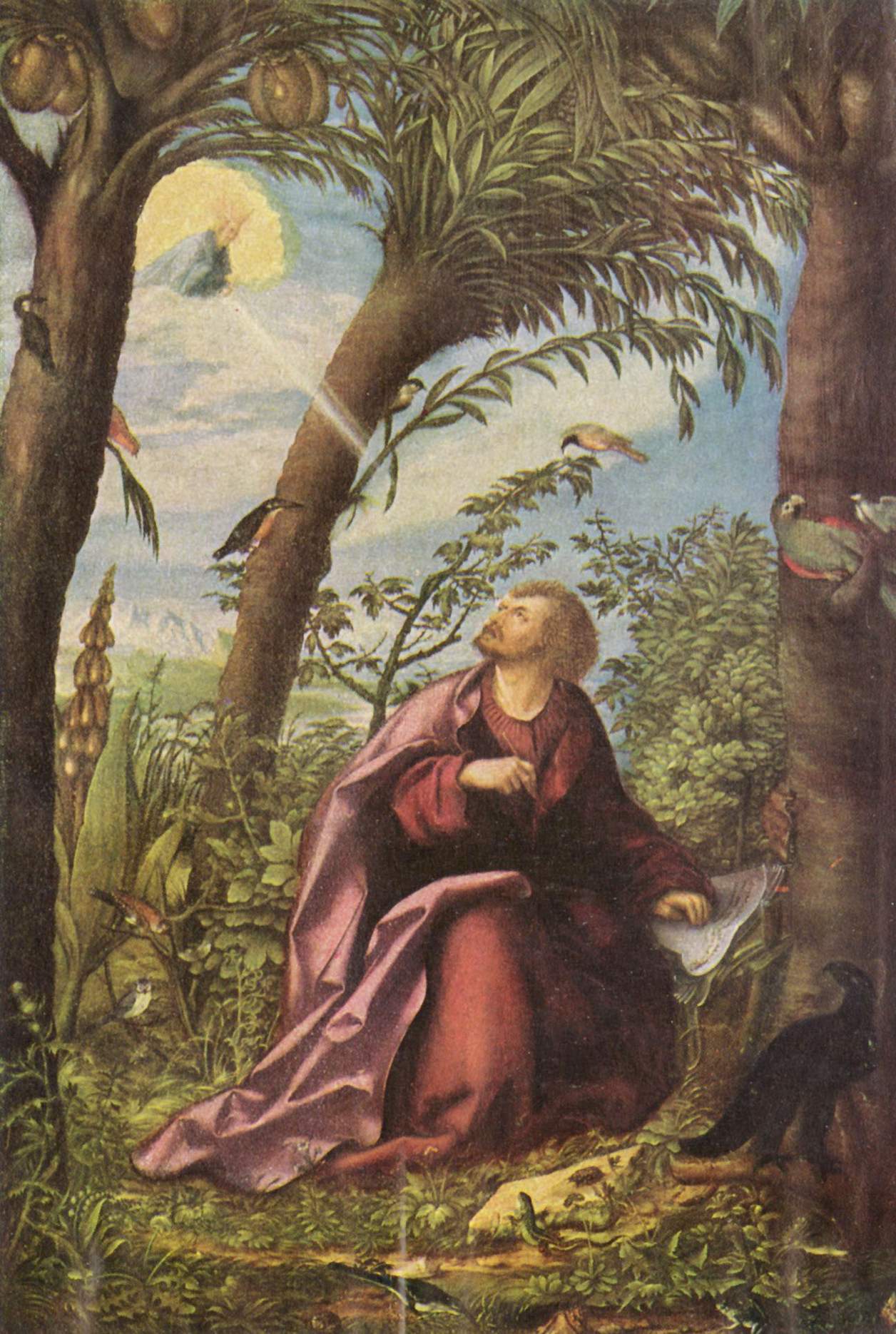
Painting by Hans Burgkmair: John looks up to the sky from a lush landscape with palm trees
Hans Burgkmair · Saint John on Patmos, 1518
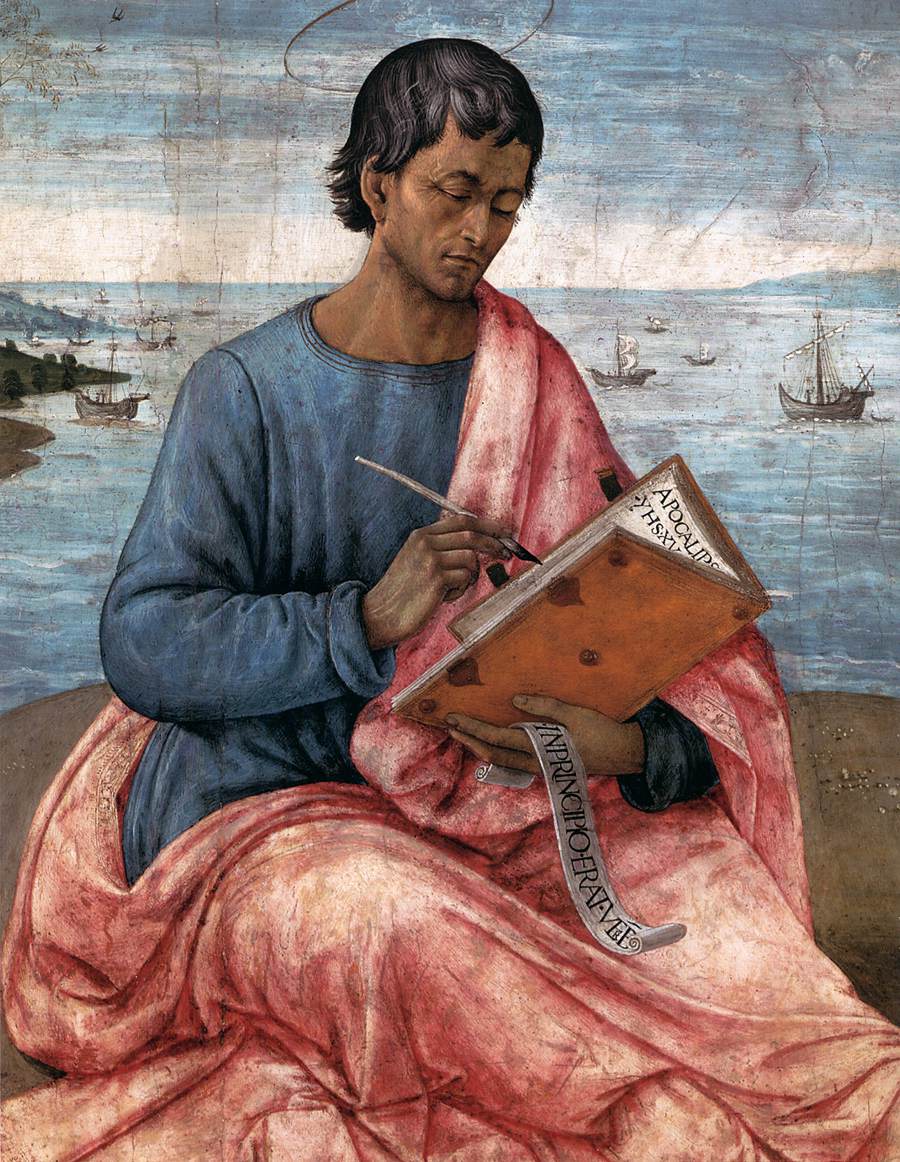
Painting by Domenico Ghirlandaio: John in a pink robe writes on the seashore, an eagle beside him
Domenico Ghirlandaio · Saint John on Patmos

According to tradition, John was exiled to Patmos around the year 95 under the Emperor Domitian. In the seclusion of the island he received the images of the Revelation – the last book of the Bible, full of seals, trumpets and figures of light, which closes with a promise: “Behold, I make all things new.”

John is also linked with the fourth Gospel, the most intimate and mystical of the four. It tells of seven signs – from the wedding at Cana, where water becomes wine, to the raising of Lazarus – and of seven sayings in which Christ says who he is. For Paul Skorpen this Gospel is an alchemical text: a description of how a human being is transformed from within.

The seven “I am” sayings

  1. II am the bread of life.John 6:35
  2. III am the light of the world.John 8:12
  3. IIII am the door.John 10:9
  4. IVI am the good shepherd.John 10:11
  5. VI am the resurrection, and the life.John 11:25
  6. VII am the way, the truth, and the life.John 14:6
  7. VIII am the true vine.John 15:1

On Patmos we follow the seven signs and the seven sayings – at places on the island that belong with them, in meditation and in conversation.

The mystical view

Three landscapes

In Paul’s work on Patmos, three great texts meet – and three landscapes that mirror one another.

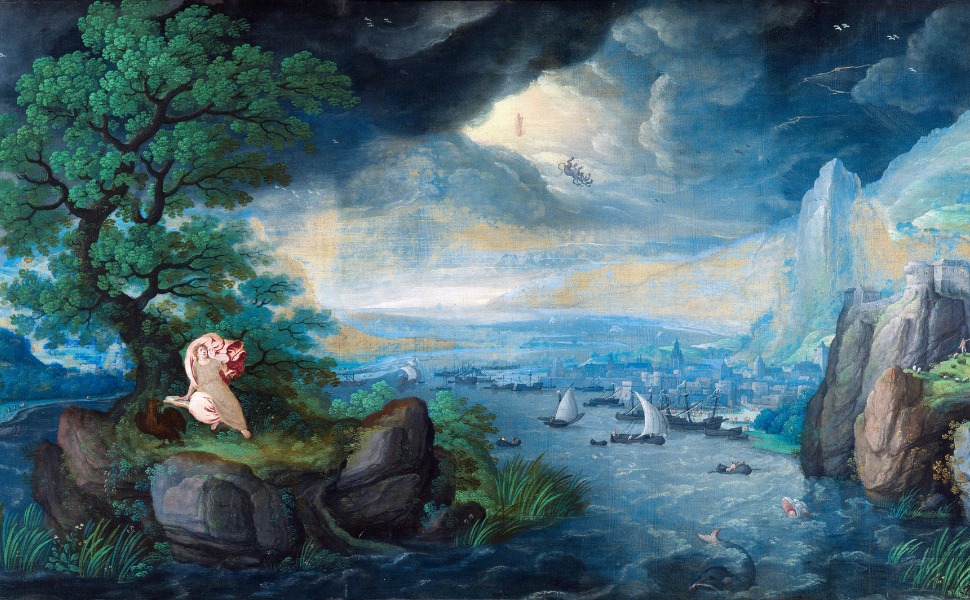
Old painting: John sits on a rock beneath a large tree above a wide bay with ships, a vision of light in the sky
Saint John on Patmos · Flemish landscape painting

Alpha

Genesis

The original landscape of creation: light, water, earth, everything that lives. It stands for what we have been given – and for the island itself, with its openness, its stillness and its light.

Transformation

The Gospel of John

Here the landscape is reshaped. The seven signs and the seven “I am” sayings describe an alchemical path on which we bring new order to our inner life – a turning point in the life of the spirit.

Omega

The Revelation

The old landscape passes away, a new earth appears and is made ready to receive the heavenly city. Paul reads the Revelation as a blueprint of the human being: our own body, with its subtle energy centres, becomes the third and innermost landscape.

Panorama over Skala, the bays and hills of Patmos and the deep blue sea

Far from everyday life and its hurry

What this week can give you

  • StillnessArriving in your own soul, in peace and with joy – far away from everyday life.
  • MeditationDaily meditations, some of them at special places on the island, and relaxation for body and mind.
  • AttunementAttuning to your own divine being – to the light that is already present in every human being.
  • Healing workLearning and practising a healing treatment developed by Paul Skorpen on the basis of the Revelation – for yourself and for others.
  • CommunityA small group, good food, wine, the sea – and conversations that stay with you.
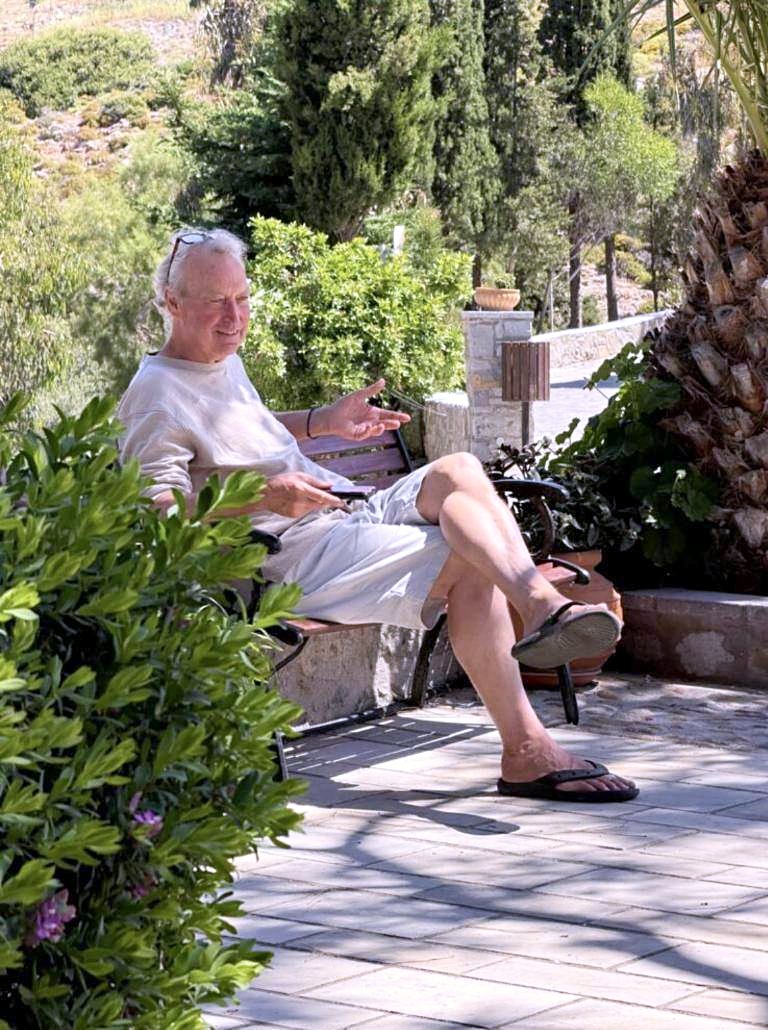
Paul Skorpen sits talking on a bench among green plants in the sunshine on Patmos

Your guide

Paul Skorpen

Healer, spiritual teacher and explorer of sacred landscapes – from Egypt and the Holy Land to Ephesus and Anatolia. For more than a decade he has returned to Patmos again and again. Through his view of the Revelation, this often-feared text becomes something you can experience: as strength, as love and self-love, as an invitation to transformation. The teachings of Daskalos are also alive in his work.

Everyone is welcome – and each person receives their own gift.

24–30 May 2027

The journey

A week on the island of Revelation – one that stays with you.

A day on Patmos

Morning

Meditation and a talk with Paul: the mystical view of the Revelation and the Gospel of John.

Afternoon

The healing treatment based on the Revelation, practised with one another – or time by the pool and the sea.

Evening

Dinner together in a taverna, sunset over the Aegean, stillness.

On two days we take our bus to more remote spots and a private boat to the neighbouring islands – and swim in quiet blue bays. We stay in one of the most beautiful hotels on the island: spacious rooms, a wonderful view, a pool and a beach nearby.

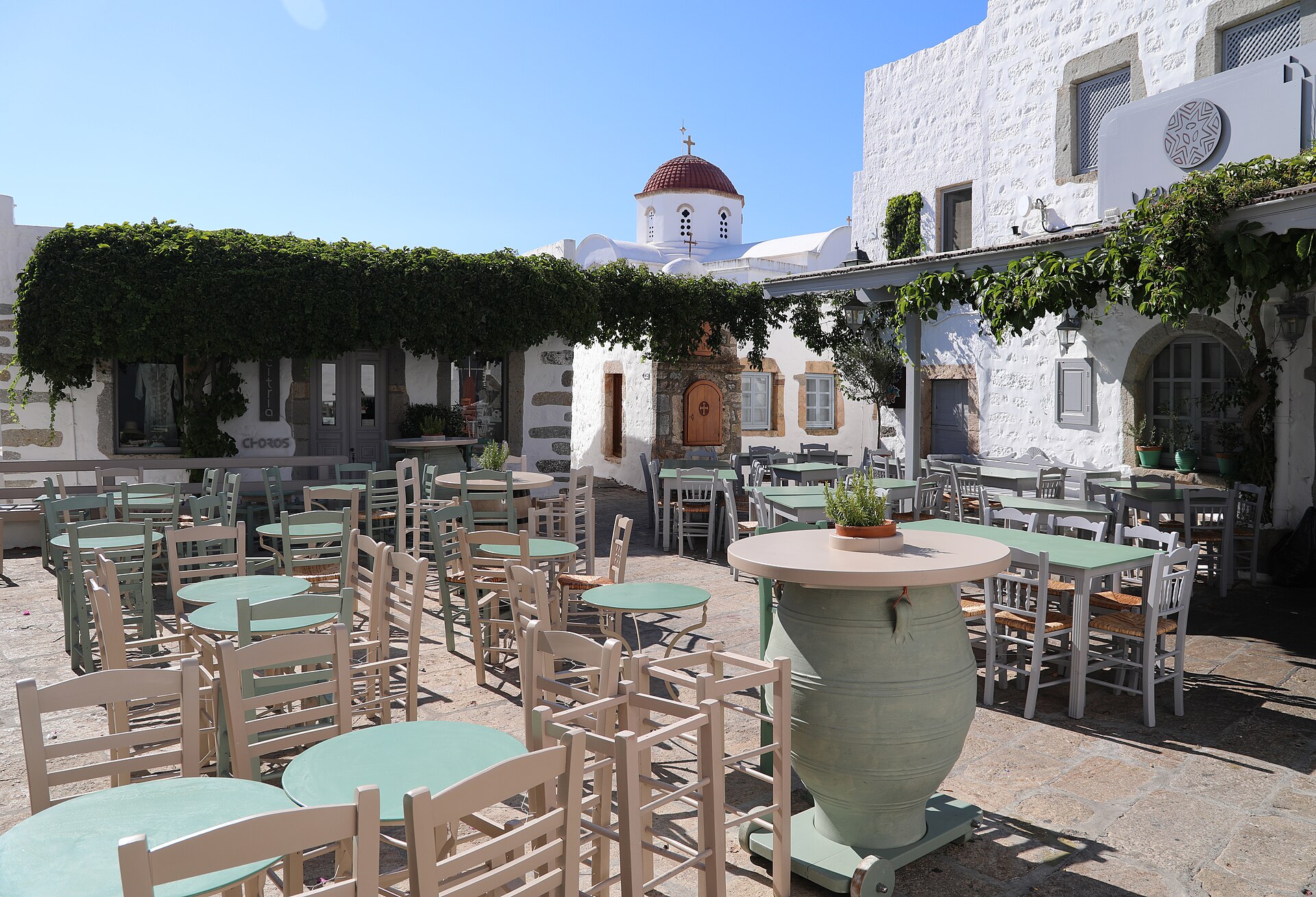
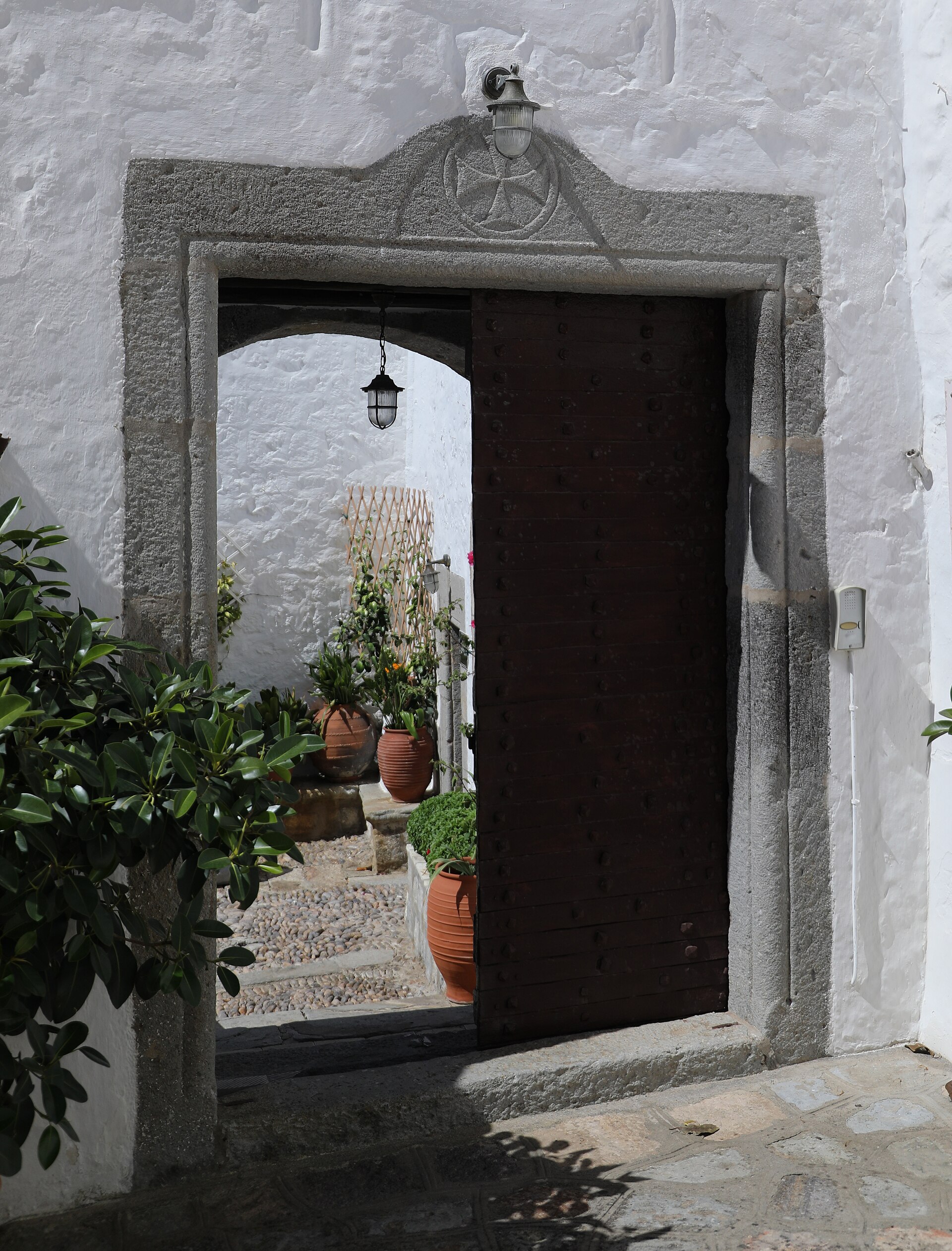
Small square in the Chora with taverna tables beneath vine leaves Open gate in a white wall of the Chora with flowerpots

Included

  • 7 nights in a double room with breakfast
  • Seminar with Paul Skorpen: talks, meditations and practising the healing treatment with one another
  • Daily relaxation practice for body and mind
  • Meditation at the island’s sacred places of power
  • 2 day trips by bus and private boat, swimming in lagoons (from 6 participants)

Not included

  • Travel to and from Patmos – we are happy to help with flights to Kos or Samos and the ferry to Patmos
  • Other meals and drinks
  • Travel insurance and tips

Dates24–30 May 2027 · Arrival day is 23 May

Price€2,490 per person incl. seminar and double room · Single room + €290

Book your place

Questions about the journey, or would you rather book in person? We are happy to help: kontakt@theosis.com · +49 (0)8152 9820952
Our travel terms apply; we recommend travel cancellation insurance.

All journeys in the seminar calendar
Stay in touch for the lastest gratis talks, mediations and Q & A sessions, along with upcoming trainings, seminars, travels and tours.